Explore by math topic

Algebra virtual manipulatives

Algebra models can make an unknown quantity or an operation visible. Tiles model expressions and area, balances model equality, and graphs show relationships. A model is a starting point for explanation, not a substitute for connecting back to symbols.

8 options with documented tools for this topic. Numbers retain the main directory’s editorial order. About the ranking

  1. Rank 02
    Illustration of colorful pattern blocks including a hexagon, rhombi, and triangles.

    An open mathematical canvas that combines shapes, numbers, fractions, and algebra.

    Explore
  2. Rank 04
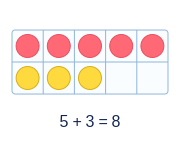
    Illustration of a ten frame with five coral counters and three yellow counters, showing five plus three equals eight.

    Digital versions of familiar classroom manipulatives, with supporting teaching resources.

    Explore
  3. Rank 05
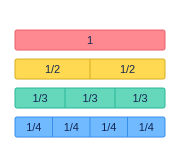
    Illustration of equal-length fraction bars divided into a whole, halves, thirds, and fourths.

    A wide selection of individual math tools, from fraction strips to classroom clocks.

    Explore
  4. Rank 06
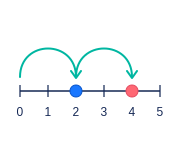
    Illustration of a number line from zero to five with two jumps of two ending at four.

    Mathematical interactives alongside lessons and puzzles from NCTM.

    Explore
  5. Rank 07
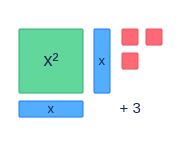
    Illustration of algebra tiles representing x squared plus two x plus three.

    Teacher-focused manipulatives spanning early number models and algebra tiles.

    Explore
  6. Rank 08
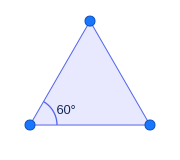
    Illustration of an equilateral triangle with a marked sixty-degree angle and three vertex points.

    Dynamic geometry, graphing, and interactive activities across a broad mathematics platform.

    Explore
  7. Rank 09
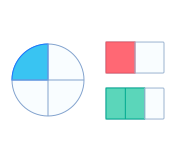
    Illustration of a quarter-shaded circle and rectangular models showing one half and two thirds.

    Focused mathematical demonstrations for fractions, clocks, geometry, and probability.

    Explore
  8. Rank 10
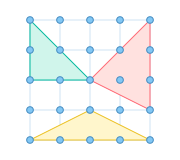
    Illustration of three colored rubber-band triangles on a five-by-five geoboard.

    Interactive environments and rich mathematical problems to explore together.

    Explore

Try this idea

Represent x + 3 = 7 on a balance. Remove three units from both sides and explain why equality remains. Connect each move to the written equation and check the solution in the original model.

A question to keep in mind: Can each action in the visual model be described with an equivalent symbolic step?

More advice on choosing a virtual manipulative