Explore by math topic

Data & probability virtual manipulatives

Chance experiments become easier to discuss when predictions and outcomes can be compared. Dice and spinners generate trials, while tables and graphs organize observations. A small sample can be uneven even when outcomes are equally likely.

9 options with documented tools for this topic. Numbers retain the main directory’s editorial order. About the ranking

  1. Rank 01
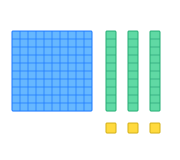
    Illustration of one hundred flat, three tens rods, and three unit blocks.

    A focused collection of hands-on math tools for iPhone and iPad.

    Number senseiPhone & iPad
    Explore
  2. Rank 02
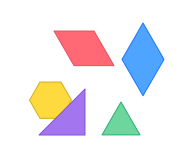
    Illustration of colorful pattern blocks including a hexagon, rhombi, and triangles.

    An open mathematical canvas that combines shapes, numbers, fractions, and algebra.

    Explore
  3. Rank 04
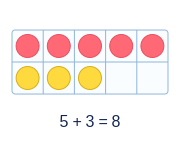
    Illustration of a ten frame with five coral counters and three yellow counters, showing five plus three equals eight.

    Digital versions of familiar classroom manipulatives, with supporting teaching resources.

    Explore
  4. Rank 05
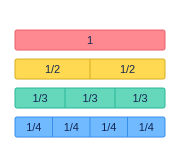
    Illustration of equal-length fraction bars divided into a whole, halves, thirds, and fourths.

    A wide selection of individual math tools, from fraction strips to classroom clocks.

    Explore
  5. Rank 06
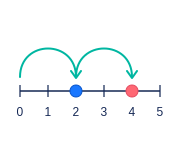
    Illustration of a number line from zero to five with two jumps of two ending at four.

    Mathematical interactives alongside lessons and puzzles from NCTM.

    Explore
  6. Rank 07
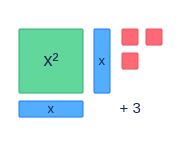
    Illustration of algebra tiles representing x squared plus two x plus three.

    Teacher-focused manipulatives spanning early number models and algebra tiles.

    Explore
  7. Rank 08
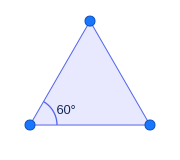
    Illustration of an equilateral triangle with a marked sixty-degree angle and three vertex points.

    Dynamic geometry, graphing, and interactive activities across a broad mathematics platform.

    Explore
  8. Rank 09
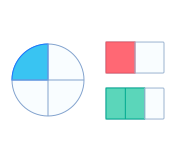
    Illustration of a quarter-shaded circle and rectangular models showing one half and two thirds.

    Focused mathematical demonstrations for fractions, clocks, geometry, and probability.

    Explore
  9. Rank 10
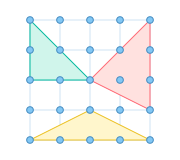
    Illustration of three colored rubber-band triangles on a five-by-five geoboard.

    Interactive environments and rich mathematical problems to explore together.

    Explore

Try this idea

Predict the results of 20 spins on a spinner with four equal sections. Record each outcome, then repeat. Compare the two runs and discuss why equal chances do not guarantee equal counts.

A question to keep in mind: Are learners distinguishing a predicted probability from the outcomes of a particular set of trials?

More advice on choosing a virtual manipulative